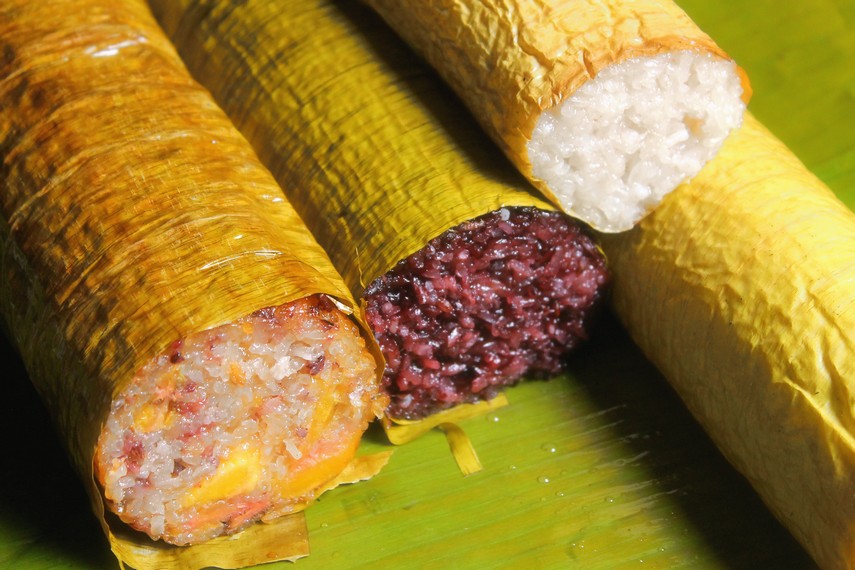
West Sumatra is known for its rich culinary heritage, offering a variety of mouthwatering dishes. Not only are its main courses popular, but its snacks and light bites are also well-loved. One of the most remarkable traditional snacks is lamang katan. Though simple in ingredients, its savory taste captivates everyone who tries it.
The Uniqueness and Making Process of Lamang
Lamang is a traditional dish made from glutinous rice, cooked in a unique way—baked inside bamboo tubes. While this dish is widely found in Malay cultural regions such as the Malay Peninsula, Sumatra, and Kalimantan, it has particularly flourished as a local culinary treasure in Minangkabau, West Sumatra.
The basic ingredients of lamang are simple: glutinous rice, coconut milk, and a pinch of salt. The required tools include banana leaves and bamboo tubes measuring around 40-70 cm in length and 7-15 cm in diameter. The process begins with washing and soaking the glutinous rice for a few hours. Once drained, it is mixed with coconut milk and salt before being placed inside a banana leaf-lined bamboo tube. The bamboo is then roasted over an open fire until the rice inside is fully cooked. Once done, the lamang is removed from the bamboo and is ready to be served.
Variations in Lamang Serving
Lamang typically comes in two main flavors: sweet and savory. The sweet variety is often served with palm sugar syrup, shredded coconut (kinca), durian, or srikaya. On the other hand, the savory version is enjoyed with rendang, eggs, or other side dishes. In Minangkabau, there is also a variation called lamang tapai, where lamang is paired with black glutinous rice tape, a popular delicacy during Eid celebrations.
Over time, lamang has evolved with different variations. In Pasar Raya, Padang, for instance, there are several types of lamang available, including white glutinous rice lamang, black glutinous rice lamang, banana-filled lamang, and lamang baluo, which has a coconut sugar filling. Outside West Sumatra, lamang can also be found in major cities like Jakarta, sold in traditional markets and restaurants specializing in Indonesian or West Sumatran cuisine.
A Culinary Heritage That Endures
Lamang is not just a delicious snack; it is a cultural heritage that continues to be preserved. This dish reflects the rich culinary traditions of Minangkabau, passed down from generation to generation. With its authentic taste and unique cooking method, lamang remains a beloved delicacy enjoyed by many across Indonesia.
For those who wish to try making lamang at home, the process is relatively simple. The glutinous rice is soaked, mixed with coconut milk and salt, then placed inside a banana leaf-lined bamboo tube. The bamboo is then roasted over an open fire for about three hours. Once cooled, the lamang is ready to be cut and served as desired.
With its rich flavors and unique preparation method, lamang katan remains an iconic dish that is a must-try for lovers of traditional Indonesian cuisine.
visit too balitraveldiary.com